
Korean highland stone clearing — THOR 2.4, CT-2100, EP-EW-4000 — removes the physical barriers that prevent tillage, planting, and mechanical harvest. But stone removal alone does not create a productive agricultural soil. The granite-derived soils of Korea’s Taebaek mountain range and the basalt soils of Jeju Island begin the agricultural production cycle with specific chemical and biological limitations that stone clearance exposes rather than resolves.
Understanding what Korean highland granite soils lack after clearance — and what agronomic interventions address those deficiencies — is the knowledge that converts a cleared field into a field that delivers economically meaningful yields in Year 1 and improves progressively through Year 3 and beyond. This guide covers the four agronomic building blocks that follow stone clearance on Korean highland land.
What Korean Highland Granite Soils Typically Lack After Clearance
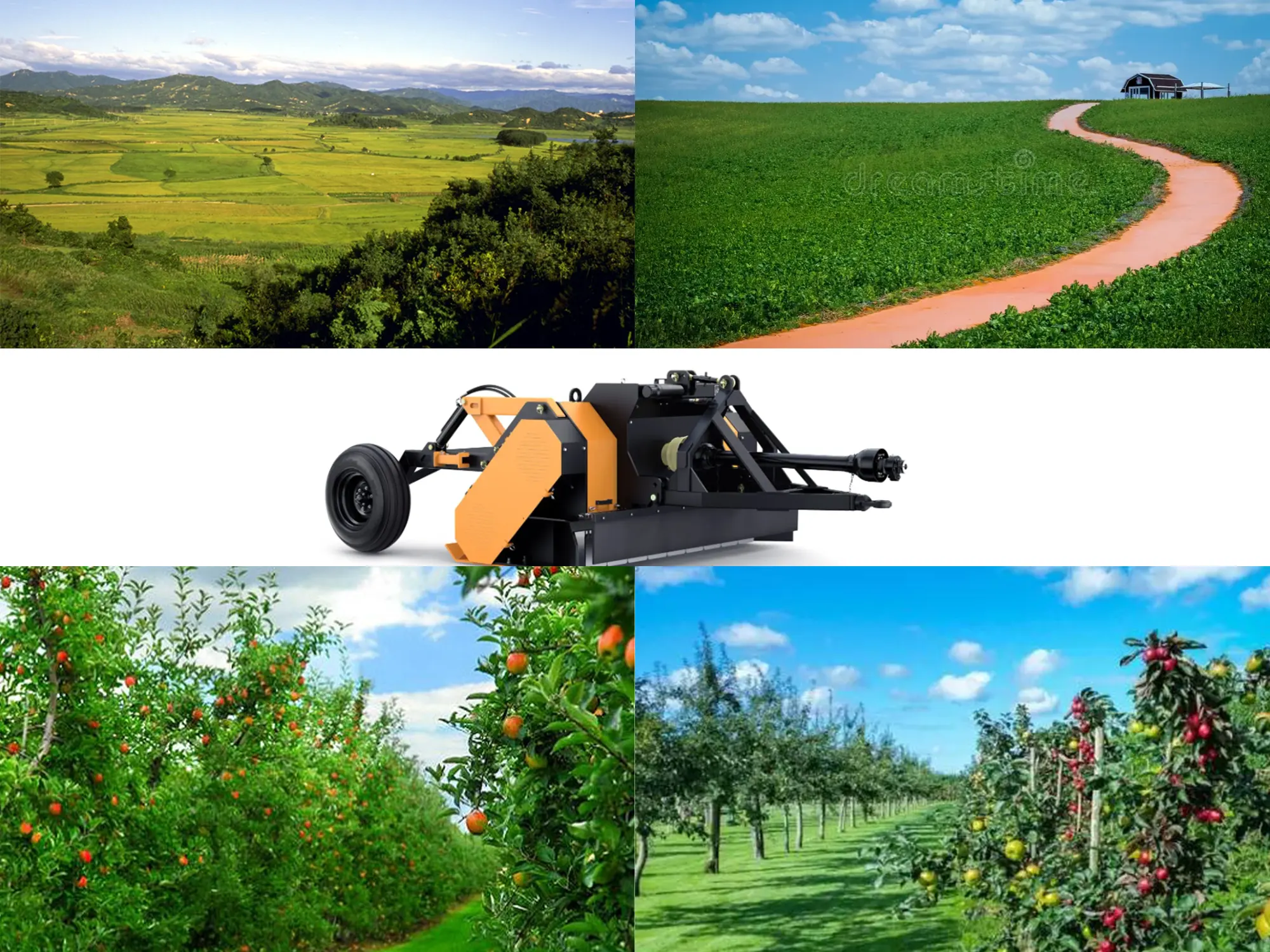
Korean highland granite-derived soils consistently show the following profile after initial stone clearance — confirmed by NAAS soil survey data from Gangwon-do highland agricultural zones:
Low pH — Acidic
Korean granite soils typically pH 4.5–5.5. Most highland crops require 5.5–6.5. Crop nutrient availability is severely limited below pH 5.5 — particularly phosphorus, calcium, and magnesium become largely unavailable to roots even when present in the soil.
Low Organic Matter
Highland granite soils under natural vegetation accumulate 2–4% organic matter. Cleared land with vegetation removed has less. Below 2% organic matter, soil structure, water-holding capacity, and biological activity are all significantly impaired — particularly important for drought-susceptible highland vegetable crops.
Low Exchangeable Cations
Potassium (K), calcium (Ca), and magnesium (Mg) are below crop requirements on most uncultivated Gangwon-do granite soils. K is essential for potato tuber quality; Ca for cell wall integrity; Mg for chlorophyll and photosynthesis. All three must be added before first-year crop production.
Low Biological Activity
Newly cleared highland soils have limited earthworm populations, low microbial diversity, and minimal fungal networks. These biological components take 3–5 years of cropping and organic matter management to develop — supporting nutrient cycling, soil aggregation, and disease suppression that established farms benefit from.
Building Block 1 — Soil Testing Before Any Amendment
The single most important action after stone clearance is soil testing before applying any amendment — lime, fertilizer, or organic material. Generic amendment recommendations based on regional averages routinely over-apply some nutrients and under-apply others on specific Korean highland sites. Soil testing removes this guesswork:
Soil sampling procedure for newly cleared Korean highland land:
Building Block 2 — Lime Application for pH Correction
If soil test pH is below 5.5, lime application before the first crop is mandatory — not optional. The yield penalty from acidic soil (pH below 5.5) on Korean highland potato is 20–40% compared to optimal pH (6.0–6.5). This yield penalty from inadequate pH correction is larger than any fertilizer application can compensate for, because the nutrient availability restrictions at low pH make applied fertilizer ineffective regardless of application rate.
Lime Timing — Why Autumn Application Is Essential
Agricultural limestone (석회석, 소석회) requires a minimum of 8–12 weeks to dissolve, react with soil particles, and raise pH to the corrected level. On Korean highland land, this reaction time means lime must be applied in autumn (October–November of Year 0) for the pH correction to be complete before spring planting (April–May Year 1). Spring lime application — applied 2–4 weeks before planting — does not achieve the target pH before the first crop is planted and is agronomically ineffective for Year 1 production.
석회석 (Ground limestone) — standard
Slow-reacting, economical, effective for gradual pH correction over 8–12 weeks. Apply at the soil-test-derived rate (typically 2,000–4,000 Kg/ha on pH 4.5–5.0 soils) before autumn PSW-3200 tillage so incorporation fully mixes lime through the tillage depth.
소석회 (Hydrated lime) — faster
Faster-reacting than ground limestone, effective in 4–6 weeks. Higher cost per unit pH change. Preferred when time constraints prevent 8–12 week reaction period. Require PPE for application (caustic material). Not recommended for surface broadcast without immediate incorporation — potential for root burn if not thoroughly mixed into soil.
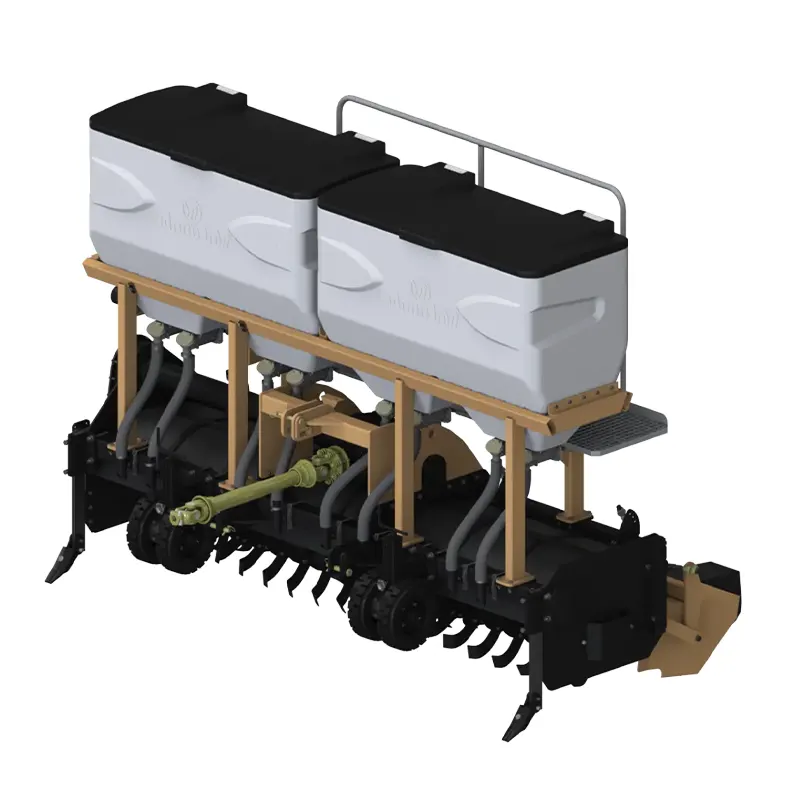
El Rotocultivador PSW-3200 plays a critical role in lime incorporation. After broadcast lime application, the PSW-3200 pass incorporates the lime throughout the full 25–30 cm tillage depth — ensuring the lime is distributed through the root zone rather than sitting on the surface where it reacts only in the top 5 cm of soil. The PSW-3200 autumn pass after lime application also begins breaking down the crop residues and surface vegetation from the stone clearance operation — improving the soil structure before spring replanting.
Building Block 3 — Organic Matter: Green Manure and Compost
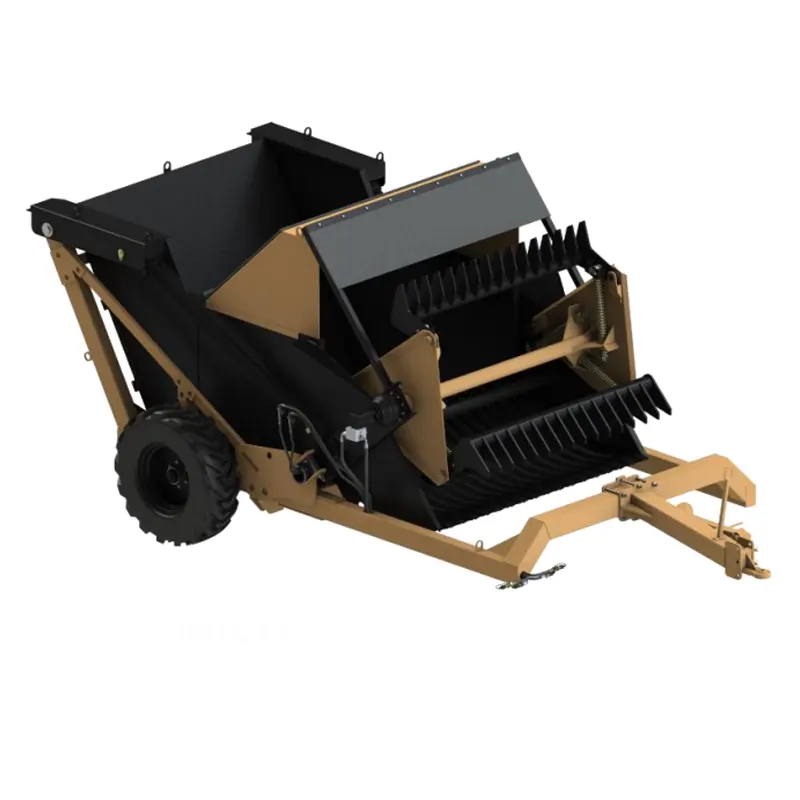
Newly cleared Korean highland soils with organic matter below 2% benefit significantly from organic matter building before or alongside the first commercial crop. Two approaches are used in Korean highland practice:
Green Manure Cropping Before First Commercial Production
For Type B and C newly developed land (as described in the land development guide) where the first-year establishment investment is already high, planting a green manure crop in the first growing season — rather than a commercial crop — before incorporating it with the PSW-3200 provides the most economically efficient organic matter boost for Year 2 commercial production.
Rye (호밀) — highland standard
Fast-establishing, cold-tolerant. Plants at 120–150 Kg/ha in late September; grows through autumn and into early spring. Incorporated by PSW-3200 in April before spring crop preparation. Produces 4–8 t/ha fresh biomass — significant organic matter addition with one PSW-3200 pass.
Hairy vetch (헤어리베치) — nitrogen-fixing
Legume that fixes atmospheric nitrogen as well as adding organic matter. Mixed seeding with rye (vetch 20 Kg + rye 80 Kg per ha) provides both organic matter and biological nitrogen contribution. Requires PSW-3200 incorporation before flowering for maximum nitrogen benefit.
Buckwheat (메밀) — summer option
Fast-growing summer green manure where a Year 1 commercial crop planting window is missed (e.g. clearance completed too late for spring planting). Plants in May–June, incorporated in August–September. Also provides weed suppression cover on newly cleared land before the commercial rotation begins.
Compost Application — Manure or Commercial
Where green manure cropping is not practical (commercial crop planted in Year 1), compost application before spring PSW-3200 tillage provides the fastest route to organic matter improvement. Korean highland farms have access to two compost sources: livestock manure compost (가축분 퇴비) from the regional agricultural cooperative or local livestock operations, and commercial organic fertilizer (유기질 비료) from NAAS-certified manufacturers. Application rate for initial soil building on organic matter below 2%: 20–40 t/ha well-composted livestock manure or equivalent commercial organic fertilizer, applied in autumn before PSW-3200 tillage and lime incorporation.
Building Block 4 — The Annual Crop Rotation and Soil Maintenance Cycle
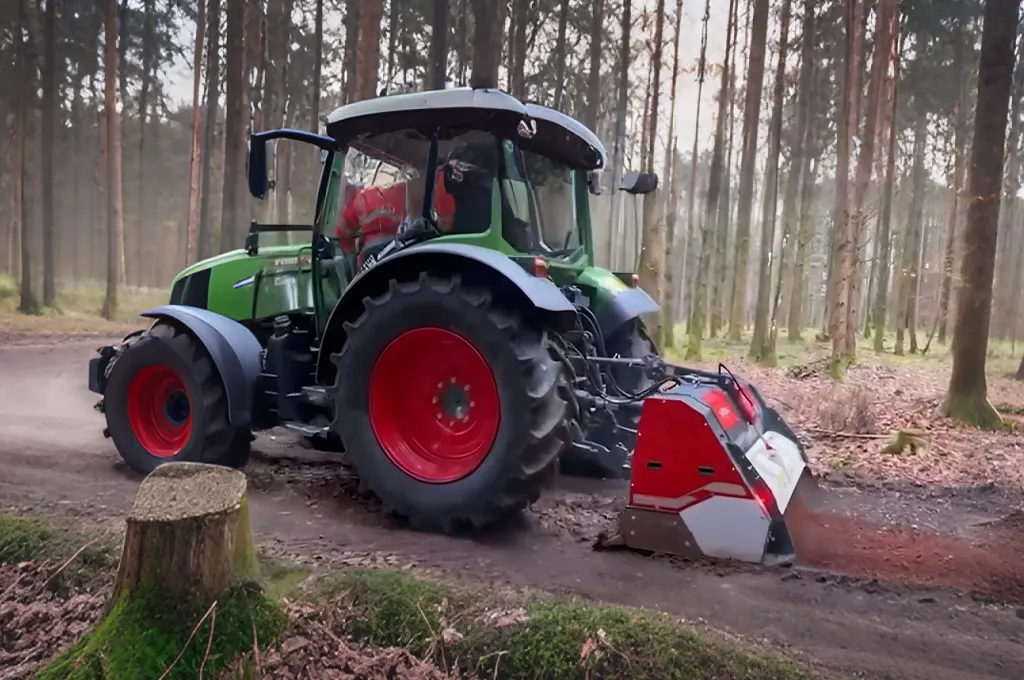
Beyond the Year 1 lime and organic matter correction, long-term Korean highland soil health is maintained through the annual cropping and management cycle. Three practices that accumulate soil health improvements year over year:
Vine and residue incorporation. The potato haulm (vine) left on the field after harvest contains organic matter and mineral nutrients recycled from the above-ground crop. Rather than removing or burning the vine material, incorporating it into the autumn PSW-3200 tillage pass returns organic matter to the soil. Korean highland soils that have received annual vine incorporation for 5+ years show measurably higher organic matter levels than adjacent fields where vines are removed.
Crop rotation including legumes. Rotating highland potato with legume crops (bean varieties, hairy vetch green manure) in the same field over a 3–4 year cycle rebuilds soil nitrogen from biological fixation, reduces pathogen build-up from continuous potato monoculture, and maintains organic matter inputs from different residue types. Korean highland farms that maintain 3-year crop rotations (potato → legume → vegetable → potato) consistently outperform continuous potato monoculture on the same soil type over 10-year production periods.
Annual soil testing and targeted amendment. Korean highland soil fertility changes year over year — potassium is depleted by high-yielding potato crops; calcium is leached in high-rainfall years; pH drifts downward under continued cultivation. Annual or biennial soil testing and targeted amendment (rather than blanket NPK application at the same rate every year) prevents the nutrient depletion that accumulates over 5–10 years of unchecked intensive cropping.
How the PSW-3200 Rotavator Supports Soil Building
The PSW-3200 rotavator is not just a seedbed-preparation machine — it is the primary soil-building implement in the Korean highland production system. Its role in annual soil building is as important as its role in spring seedbed preparation:
Incorporación de cal
The PSW-3200’s 25–30 cm tillage depth distributes lime through the full root zone — far more effective than surface broadcasting without incorporation. Annual or biennial lime application before the autumn PSW-3200 pass maintains target pH in the face of natural acidification under Korean highland rainfall.
incorporación de abono verde
The PSW-3200’s rotor efficiently mulches and incorporates standing green manure crops (rye, vetch) in a single pass. The rotor’s high-speed cutting action breaks the plant material into small fragments that decompose rapidly — releasing organic matter and nutrients into the root zone within 4–6 weeks of incorporation.
Compost incorporation
The PSW-3200 B model (with fertilizer bunker) can distribute granular compost pellets during the tillage pass, combining organic matter application and incorporation in a single operation. This approach is particularly efficient for Korean highland farms where the spring preparation window limits the number of available field passes.
The Three-Year Soil Improvement Arc — What to Expect Year by Year
Korean highland farmers beginning production on newly cleared land should calibrate their yield expectations and management inputs to the progressive soil improvement arc that occurs over the first three growing seasons. Understanding what is happening agronomically in each year — and what management actions accelerate improvement — helps avoid the common mistake of abandoning correct soil management practices after a disappointing Year 1 yield before the soil improvement has had time to manifest as yield.
Soil Test Timing — When to Test and What to Do with the Results
Korean highland soil management is most effective when guided by actual soil test data rather than standardised application rates that don’t account for field-specific nutrient levels and pH. Recommended soil testing schedule for highland potato and vegetable production:
| When to test | Razón | Action from result |
|---|---|---|
| Before first crop (Year 0) | Establish baseline; determine lime and amendment needs | Apply calculated lime rate before autumn tillage; plan Year 1 fertilizer programme |
| Year 2 autumn | Confirm pH correction; assess K and Ca after first crop removal | Top-up lime if pH drifted below 5.8; add K and Ca if depleted by first crop |
| Every 2–3 years thereafter | Monitor gradual pH drift and nutrient depletion under continued cultivation | Adjust lime and K application based on test — prevents over-application of expensive inputs |
| Before variety or crop change | Different crops have different pH and nutrient optima | Adjust pH target and fertilizer programme to the new crop’s requirements |
Preguntas frecuentes
How many years does it take for newly cleared Korean highland land to reach full productive potential?
With systematic soil building (lime, organic matter, annual nutrient management), Korean highland granite soils typically reach 80–90% of their productive potential by Year 3 and full potential by Year 5. Year 1 yields on newly cleared and limed land are typically 60–75% of the same field’s Year 5 yields — reflecting the time needed for organic matter to accumulate, soil biology to establish, and soil structure to improve through repeated cultivation. Farms that skip the Year 0 lime application and organic matter building steps typically lag behind this improvement trajectory by 2–3 years, reaching Year 5 productivity at Year 7–8 instead.
Can THOR crushed stone fragments left in the field affect soil chemistry?
Korean highland granite fragments left in the soil as fine aggregate (below the CT-2100’s pick-up threshold) do not significantly affect soil chemistry over normal production timescales — granite is chemically inert at agricultural pH levels and weathering rates. The stone fragments do contribute to soil drainage and aeration as they disaggregate further over seasons, which is generally beneficial for Korean highland soils that can develop compaction problems under repeated tractor traffic. What the fragments cannot contribute is organic matter or plant-available nutrients — those must be added through the amendment programme described in this guide regardless of residual stone fragment content.
Does Korea Watanabe provide soil advice alongside equipment recommendations?
Korea Watanabe’s primary expertise is in stone clearance and agricultural machinery — we do not provide individual soil management consultancy. For specific soil amendment recommendations, the county agricultural technology center (군 농업기술센터) provides free soil testing and crop-specific amendment calculations for Korean farmers. NAAS publications on highland agricultural management (고랭지 농업기술) are available through the Rural Development Administration (농촌진흥청) for detailed Korean highland soil management guidance. What Korea Watanabe provides is the machinery advice that ensures the PSW-3200 rotavator correctly incorporates your amendments at the right depth and with the right tillage quality to make those amendments effective.
Cleared Land? Build It Right — PSW-3200 Rotavator for Lime and Amendment Incorporation.
Field area (ha) + target crop + current tractor HP → PSW-3200 Standard or B model recommendation with tillage depth and lime incorporation guidance. Korea Watanabe, Ansan-si, Gyeonggi-do.
Editor: Cxm